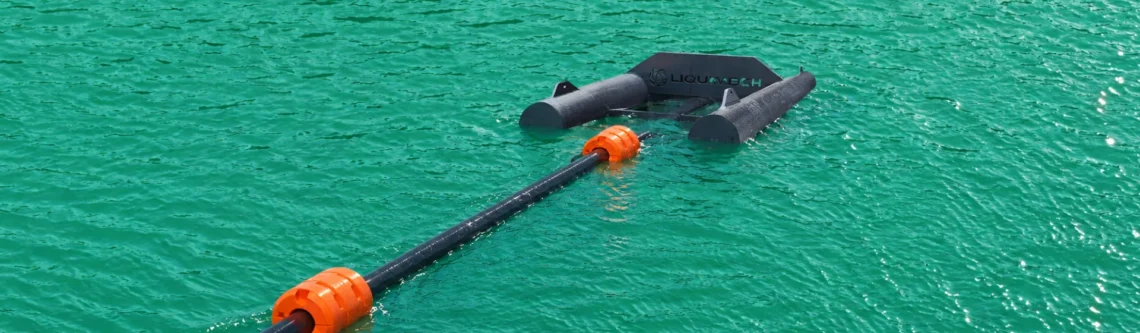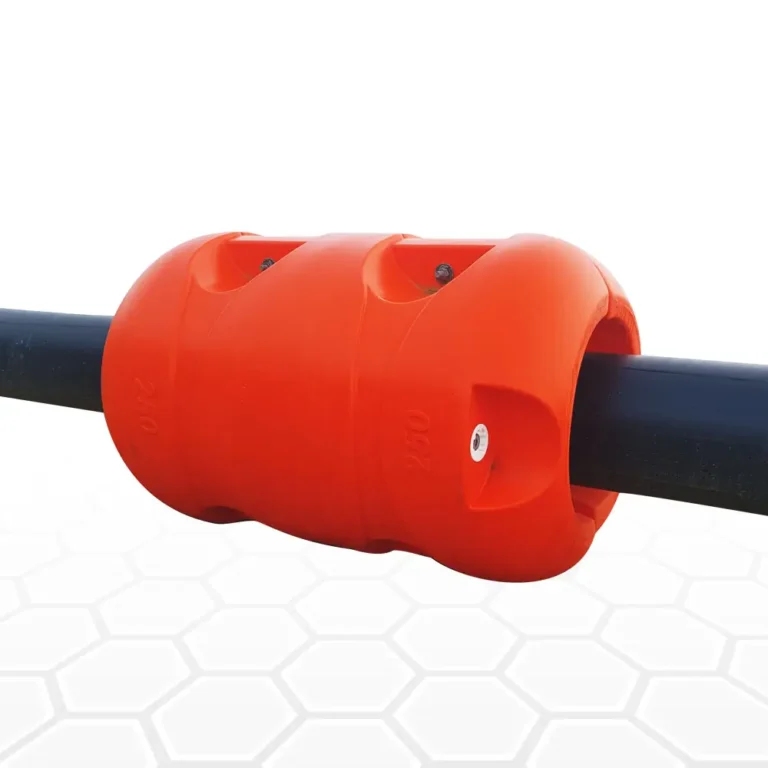
Pipeline floats provide buoyant support for pipes and hoses used to transfer water, slurry and other liquids across waterways, ponds, dams and work areas. By distributing flotation along the transfer line, they help keep the pipeline at its intended position on the water while accommodating the pipe, its contents and operating conditions.
For mining, dredging, civil construction and industrial projects, a floating pipeline can provide a practical alternative where routing pipe across land is difficult, restricted or impractical. However, selecting suitable pipeline floats involves more than choosing a float based on size or buoyancy alone. Pipe dimensions, fluid weight, connections, float spacing, route and operating conditions all influence how the complete system performs.
Liquimech provides industrial liquid-management equipment and solutions for demanding Australian applications. Understanding how pipeline flotation works and what needs to be considered during selection can help project teams plan more suitable liquid-transfer arrangements.
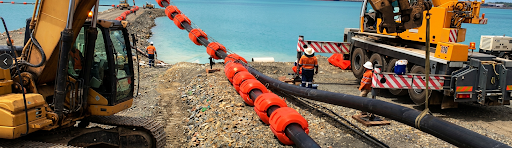
What Are Pipeline Floats?
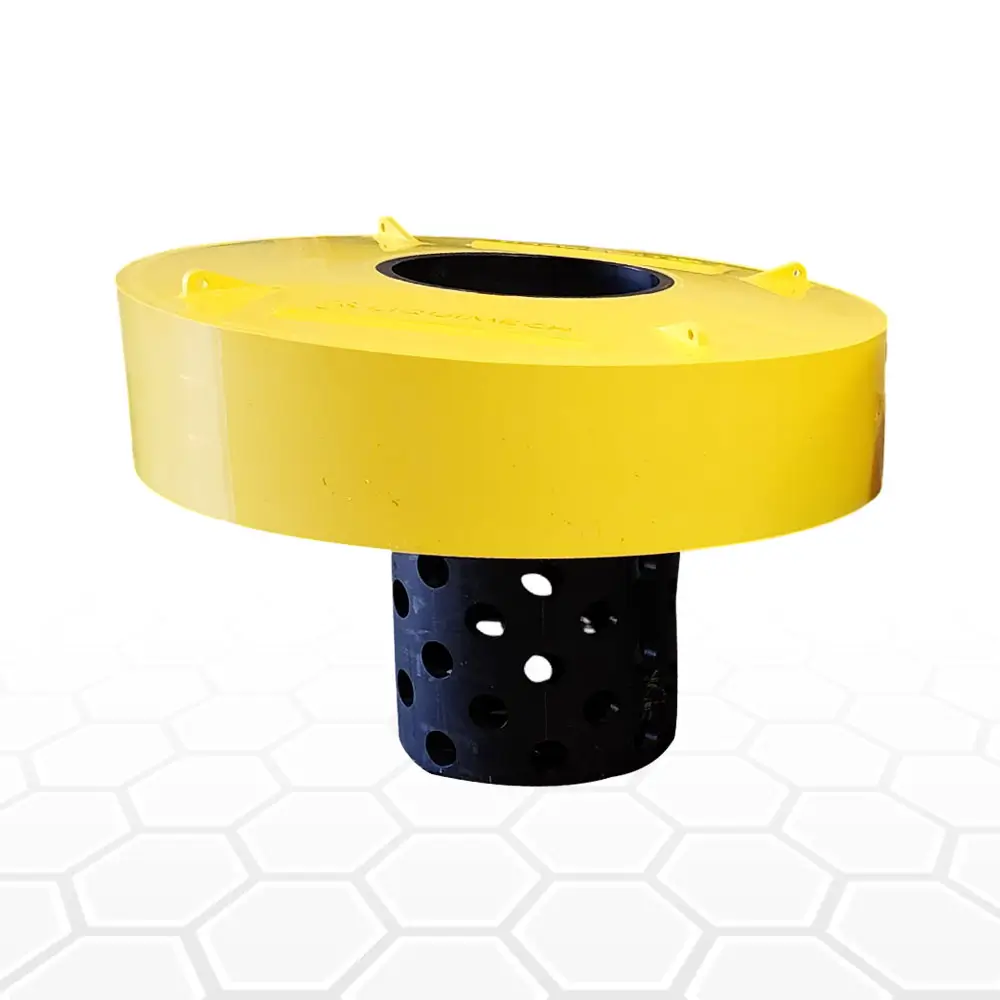
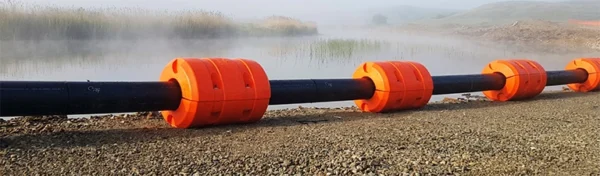
Pipeline floats are buoyant supports fitted at intervals along a pipe or hose to help it float on the water’s surface. They support the pipeline’s weight and a portion of its operating load, allowing liquid to be transferred between locations where a floating route is required.
Unlike a land-based pipeline supported by the ground, pipe stands or structural supports, a floating pipeline relies on distributed buoyancy to maintain its position on the water. The floats work together along the line to support the pipe or hose, rather than providing support at a single point.
Pipeline floats are commonly considered for:
- Water transfer across dams, ponds and waterways
- Slurry transfer during mining and dredging operations
- Temporary liquid-transfer routes for civil construction projects
- Industrial pumping applications involving water access
- Projects where establishing a land-based pipeline route is impractical
The appropriate floating pipeline arrangement depends on the transfer duty, route, pipe or hose configuration and the conditions in which it will operate.
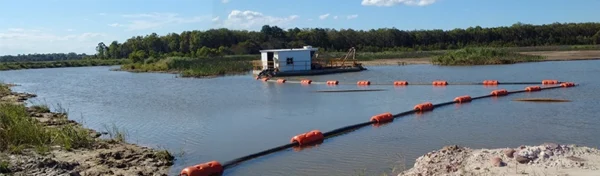
How Do Pipeline Floats Work?
Pipeline floats work through buoyancy. When a float displaces water, the water produces an upward force that supports the float and contributes to carrying the connected pipe or hose.
When multiple floats are installed along a pipeline, this support is distributed across the length of the line. The arrangement helps maintain the pipeline’s intended position on the water while supporting the weight of the pipe, transferred liquid and associated components.
The amount of buoyant support required depends on the complete assembly; not just the pipe itself.
Understanding buoyancy and pipeline load
The required flotation needs to account for the weight of the pipe or hose, the fluid being transferred, and additional components such as valves, couplings and fittings.
For example, a pipeline carrying water may have different support requirements from one transporting a denser slurry. Similarly, a pipe operating full may have different loading considerations from one operating partially filled or under changing flow conditions.
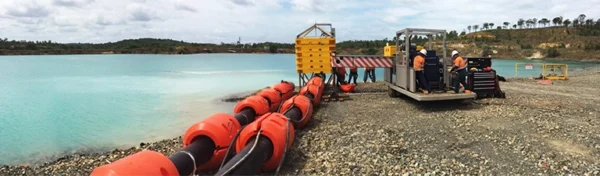
When assessing pipeline floats, consider:
| Factor | Why it matters |
| Pipe or hose dimensions | Outside diameter, wall thickness and material affect weight, fit and flexibility. |
| Fluid being transferred | Fluid density influences the operating load carried by the floating line. |
| Operating condition | Full, partially filled or changing flow conditions may affect the supported load. |
| Fittings and connections | Couplings, valves, bends and additional components contribute weight. |
| Float buoyancy | Available buoyant support must be assessed against the complete operating arrangement. |
| Float distribution | Position and spacing influence how support is distributed along the pipeline. |
A float’s stated buoyancy should therefore be assessed against the intended application and the conditions to which the specification applies.
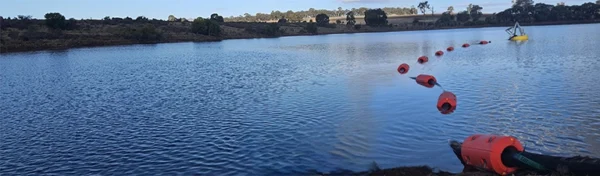
Why Pipeline Float Spacing Matters
Float spacing is an important part of floating pipeline design. The floats need to be distributed along the line to provide suitable support for the pipe, its contents and the operating conditions.
Spacing that is unsuitable for the pipeline configuration may result in uneven support, changes in line height or increased bending between supported sections. The effects can vary depending on pipe stiffness, loading, route shape and movement during operation.
There is no single spacing arrangement suitable for every floating pipeline.
Factors affecting float spacing
- Pipe diameter and material: Different pipe dimensions and materials affect weight, flexibility and how the line responds between supports.
- Supported load: Pipe weight, transferred fluid and additional fittings influence the support required.
- Route configuration: Straight sections, bends, changes in direction and connection points may require different consideration.
- Operating movement: Water conditions, line movement and operational changes can influence how the floating pipeline behaves.
- Float specifications: The buoyancy and configuration of the selected floats must be considered when determining their distribution.
The final float layout should be assessed against the intended operating conditions and the complete floating pipeline configuration.
Where Are Pipeline Floats Used?
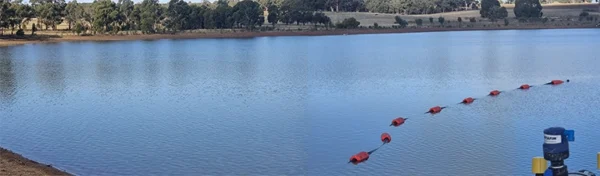
Pipeline floats are used where pipes or hoses need to carry liquid across water or along a floating transfer route. They are particularly relevant to projects involving pumping, water management, slurry transfer and dredging.
Mining and dewatering operations
Mining operations may require water to be transferred between sumps, dams, pumping locations, storage facilities or other areas of a site. Where the transfer route crosses water or a land-based pipeline route is impractical, a floating pipeline may provide an alternative. Pipeline floats can support the pipe or hose used in these arrangements, with selection based on the fluid, pumping duty, route and site conditions.
Dredging and slurry transfer
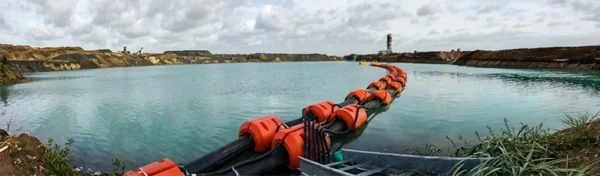
Dredging involves removing sediment, sand and other material from underwater areas. The material may be transported through pipelines or hoses as a slurry, including along floating transfer routes. Pipeline floats support the transfer line along the water’s surface. The required flotation arrangement depends on the pipeline configuration, slurry characteristics, connections and operating conditions.
Civil construction and infrastructure
Civil construction and infrastructure projects may involve temporary water transfer across ponds, waterways, reservoirs or other areas where a conventional pipeline route is difficult to establish. Floating pipelines can support water-transfer requirements associated with construction, pumping and site water management, subject to the project’s route and operating conditions.
Marine and industrial liquid transfer
Marine and industrial applications may require liquid to be transferred between locations separated by water. A floating pipeline can provide a transfer route where it is suitable for the site and operating duty. The route, connection points, water conditions, fluid and expected pipeline movement should be considered when planning the arrangement.
How to Choose the Right Pipeline Floats?
Selecting pipeline floats requires matching the float configuration to the pipe or hose and the intended operating conditions. A float that is suitable for one transfer application may not be appropriate for another, even if the pipe dimensions appear similar.
Before comparing products, establish the requirements of the floating pipeline.
1. Confirm pipe or hose compatibility
Identify the pipe or hose outside diameter, material, wall thickness and configuration. Compatibility is important for fitment and assembly, as well as understanding the weight and flexibility of the line.
Confirm that the selected float is compatible with the intended pipe or hose and connection arrangement.
2. Assess the complete supported load
Account for the pipe or hose, transferred liquid or slurry, fittings, couplings, valves and other components that contribute to the load. Consider the intended operating condition, including whether the pipeline will be full, partially filled or subject to changes during operation.
3. Determine the float arrangement
Float distribution should suit the pipeline, supported load, route and operating conditions.
Consider the spacing along straight sections, changes in direction, connections and areas where the pipeline may flex or experience movement. Final spacing should be determined for the specific application rather than relying on a universal rule.
4. Consider environmental and operating conditions
Assess water conditions, exposure, transferred material, handling requirements and the potential for movement. Consider how the floating pipeline will be inspected and maintained during operation.
5. Plan connections and the complete transfer route
Pipeline floats form part of a larger liquid-transfer arrangement. Consider how the floating line connects to pumps, land-based piping, hoses, storage and flow-control equipment.
Pipeline Floats vs Pontoons and Floating Pump Platforms
Pipeline floats, pontoons and floating pump platforms serve different purposes. Although all involve buoyant support, they are designed around different equipment and operational requirements.
| Equipment | Primary function | Typical application |
| Pipeline floats | Provide buoyant support along a pipe or hose | Floating water or slurry transfer lines |
| Pontoons | Provide a buoyant platform | Supporting equipment, structures or access arrangements, depending on design |
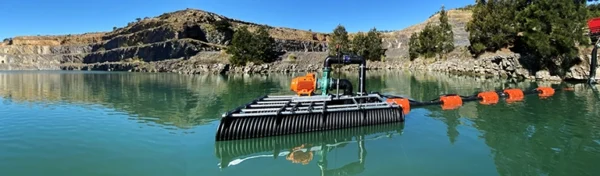
| Floating pump platforms | Provide a platform for pumping equipment | Pumping applications where equipment operates on or near the water |
Understanding these differences helps project teams select the equipment suited to the actual requirement rather than treating all floating equipment as interchangeable.
Planning Pipeline Float Installation, Operation and Maintenance
Planning the floating pipeline before installation helps coordinate the route, equipment, connections and handling requirements.
Before installation
Establish the transfer duty, pipe or hose configuration, route, connection points and operating conditions. Identify access limitations and how the pipeline will be assembled, positioned and connected to the pumping system.
During installation and commissioning
Follow the relevant product instructions and project-specific engineering requirements.
Pipeline Floats for Industrial Water and Slurry Transfer
Selecting suitable pipeline floats requires an understanding of buoyancy, pipeline loading, fluid characteristics and operating conditions. These are engineering considerations that need to work together to achieve a fit-for-purpose floating pipeline arrangement.
Liquimech brings engineering knowledge and industrial liquid-management expertise to demanding mining, civil and industrial applications. Our capabilities span pumping systems, hose and piping, flow control, standpipes and bulk liquid storage, giving us a broader understanding of the equipment and system requirements involved in industrial water and slurry transfer. Whether you’re planning a new floating pipeline or reviewing an existing transfer arrangement, talk to Liquimech. Our team can help assess your application, understand your operational requirements and identify a suitable equipment solution.
Frequently Asked Questions About Pipeline Floats
What are pipeline floats used for?
Pipeline floats provide buoyant support for pipes or hoses used to transfer liquids across water. They are commonly used in mining, dredging, civil construction, marine and industrial applications where a floating transfer route is suitable.
How do pipeline floats keep pipes afloat?
Pipeline floats displace water to generate buoyant force. When fitted along a pipe or hose, they distribute support across the floating line, helping it maintain its intended position on the water.
Can pipeline floats be used for slurry transfer?
Pipeline floats may be used with floating pipelines carrying slurry, provided the flotation arrangement is suitable for the pipe, slurry, supported load, connections and operating conditions. Slurry characteristics and the complete pipeline configuration need to be considered during selection.
How do I calculate the buoyancy required for pipeline floats?
The required buoyancy depends on the complete supported load, including the pipe or hose, fluid, fittings and operating configuration. The selected float specifications and distribution must be assessed against the intended application. A project-specific assessment is required to determine a suitable arrangement.
How far apart should pipeline floats be installed?
Float spacing depends on pipe dimensions, material, supported load, float specifications, route and operating conditions. There is no universal spacing suitable for every floating pipeline. The final layout should be assessed against the specific application.
Can pipeline floats be used with different pipe materials?
Compatibility depends on the float design, pipe outside dimensions, assembly method and intended application.
Are pipeline floats the same as pontoons?
No. Pipeline floats support pipes or hoses along a floating transfer route. Pontoons are buoyant platforms typically used to support equipment, structures or access arrangements, depending on their design and application.
What should I consider when selecting pipeline floats?
Consider pipe or hose compatibility, supported load, buoyancy specifications, float spacing, route, operating conditions, assembly, connections and maintenance requirements. The complete transfer system should be assessed to ensure the flotation arrangement suits the application.
Can Liquimech help with a floating pipeline project?
Liquimech supplies industrial liquid-management equipment and solutions for mining, civil and industrial applications. If your project involves water or slurry transfer, pumping, piping, flow control or related equipment, contact Liquimech to discuss the application and relevant system requirements.