Managing water from dams, ponds, mine pits, reservoirs and other water sources can be challenging when sediment, changing water levels and surface conditions affect pump performance.
A Floating Suction Device provides a practical way to position a pump intake below the water surface while keeping it away from settled sediment at the bottom. By following changing water levels, a floating intake can help maintain a more consistent intake position and reduce the risk of drawing excessive air, sediment, silt or other unwanted material into the pumping system.
Liquimech Floating Suction Device for Pumps and Water Intake Systems are engineered for demanding water transfer applications across mining, agriculture, civil construction, industrial operations and emergency water supply.
This guide explains how floating suction systems work, the water-intake challenges they address, where they can be used, and the key considerations when selecting a system for your pump and site conditions.
Key Takeaways
- Understand how a Floating Suction Device helps maintain a submerged intake position as water levels change.
- Learn how floating water intakes can help minimise sediment pickup, vortex formation and air entrainment.
- See how floating suction systems support mine dewatering, irrigation, water transfer and other water management applications.
- Understand why intake configuration, pump requirements and site conditions are important when selecting a system.
- Learn how a floating water intake can integrate with pumps, HDPE pipe, hoses, pipe floats, valves and other water-transfer equipment.
What Is a Floating Suction Device?
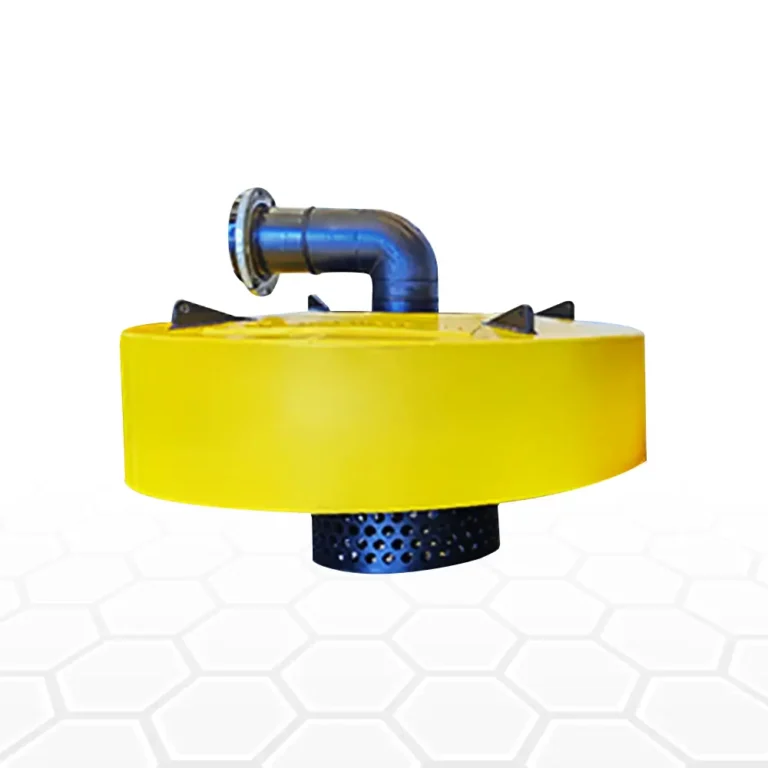
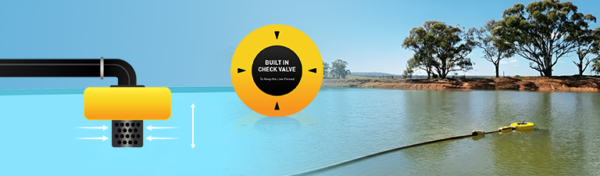
A Floating Suction Device is a buoyant water intake assembly designed to keep the pump suction intake below the water surface while allowing it to follow changing water levels.
Unlike a fixed intake positioned at one elevation, a floating intake moves with the water level. This helps maintain a consistent submerged intake position while keeping the intake away from sediment that may accumulate on the bottom of a dam, pond, mine pit or reservoir.
Liquimech Floating Suction Device for Pumps and Water Intake Systems incorporate a floating suction strainer and anti-vortex technology to help minimise sediment pickup, vortex formation and air entrainment before water reaches the pump.
The result is a cleaner and more stable water intake that can help support reliable pumping and water-transfer operations.
Why Water Intake Position Matters
The position of a pump suction intake can directly affect the quality and stability of the water entering the pumping system.
An intake positioned too close to the water surface may be more susceptible to air entrainment and vortex formation. An intake positioned too close to the bottom may draw greater quantities of settled sediment, silt, mud or tailings.
These conditions can contribute to reduced pump performance, increased wear and higher maintenance requirements.
A floating water intake addresses this challenge by positioning the suction intake below the surface and above the bottom of the water source.
Surface Intake Risks
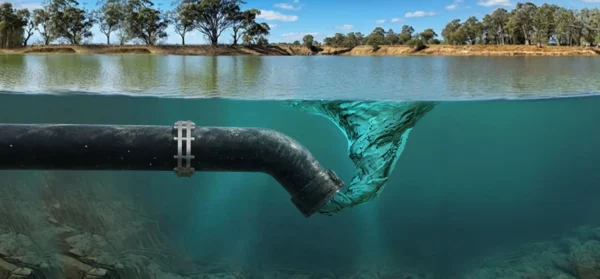
Drawing water too close to the surface can increase the potential for air to enter the suction line, particularly where surface conditions or water movement promote vortex formation.
Air entering the suction system can affect pump operation and may contribute to cavitation under unsuitable operating conditions.
Bottom Intake Risks
Sediment naturally settles toward the bottom of dams, ponds, mine pits and other water storage or collection areas.
A bottom-draw intake can disturb and draw this material into the suction system. Sand, silt, mud and tailings can increase wear on pumps and associated equipment.
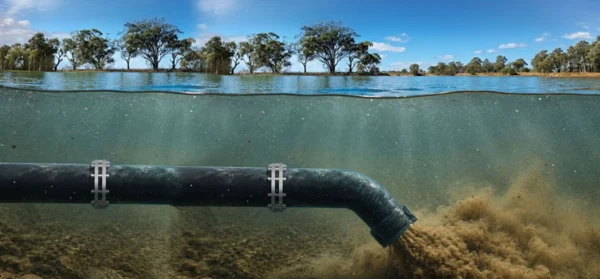
The Floating Intake Advantage
A floating intake follows the water level while maintaining the intake below the surface and away from the bottom.
This helps draw cleaner water and can reduce sediment pickup and air ingestion compared with poorly positioned fixed intakes.
How Does a Floating Suction Device Work?
A typical floating water intake system works through three basic stages.
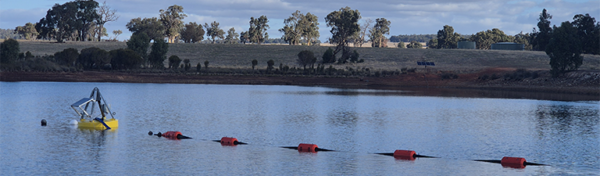
Step 1: Connect the intake to the pump suction line.
The Floating Suction Device is connected to the pump suction system using a suitable hose, HDPE pipe or other compatible connection.
Step 2: The float positions the intake below the surface.
The buoyant float keeps the intake submerged as the water level changes, helping maintain a suitable intake position.
Step 3: Water enters through the intake system.
The floating suction strainer and wide intake arrangement help draw water while the integrated anti-vortex design helps minimise vortex formation and air entrainment.
This arrangement allows the pumping system to continue drawing water as the level changes without relying on a fixed intake elevation.
Anti-Vortex Technology for More Reliable Pump Suction
Vortex formation can introduce air into a pump suction system and negatively affect pumping performance.
Liquimech Floating Suction Device for Pumps and Water Intake Systems incorporate Anti-Vortex Technology designed to distribute water entry across the intake and help reduce vortex formation.
Combined with the submerged floating intake position, this helps minimise:
- Air entrainment
- Vortex formation
- Sediment pickup
- Cavitation risk
- Pump wear
The objective is simple: provide a more stable intake of cleaner water to support reliable water-transfer operations.
Floating Suction Device Applications
A Floating Suction Device can be used across a wide range of water-management applications where water levels vary or sediment at the bottom of the source presents an intake challenge.
Mining & Mine Dewatering
Mine pits, dams and water-management facilities can experience changing water levels and significant sediment loading.
Liquimech Floating Water Intake Systems help position the pump suction above settled material while following changing water levels.
Applications include:
- Mine dewatering
- Pit water extraction
- Process water transfer
- Tailings water recovery
- Water storage ponds
- Industrial water management
By helping reduce sediment and air ingestion, the system can support reliable pump operation in demanding mining environments.
Agriculture & Irrigation
Reliable access to water is essential for agricultural operations.
Floating water intakes can draw water from dams, ponds and reservoirs while maintaining the intake below the surface and away from settled material.
Applications include:
- Irrigation
- Horticulture
- Viticulture
- Broadacre farming
- Livestock watering
- Farm dams
- Water storage reservoirs
The floating configuration allows the intake to follow changing water levels while helping provide a cleaner water source for irrigation and transfer systems.
Dams, Ponds & Reservoirs
Water sources can accumulate sediment over time, particularly where runoff carries soil and other material into the storage area.
A floating intake positions the suction point below the surface rather than directly on the bottom, helping minimise the pickup of settled sediment.
This makes floating water intakes suitable for:
- Farm dams
- Water storage ponds
- Reservoirs
- Process water ponds
- Industrial water storage
- Environmental water management
Civil Construction & Water Transfer
Civil and infrastructure projects often require temporary or permanent water-transfer systems that can adapt to changing site conditions.
Liquimech can configure Floating Suction Device for integration with pumping equipment, HDPE pipe, hoses and pipe floats to support water transfer requirements across construction sites.
Applications may include:
- Temporary water transfer
- Construction water supply
- Dewatering
- Infrastructure projects
- Site water management
Industrial & Process Water
Industrial facilities may require dependable water extraction from ponds, dams, reservoirs or other water sources.
Floating Suction Device for Pumps and Water Intake Systems can help provide a more controlled suction point while reducing the potential for excessive sediment and air ingestion.
Applications include:
- Process water
- Industrial water transfer
- Quarries
- Heavy industry
- Water storage facilities
Firefighting & Emergency Water Supply
Access to suitable water sources can be critical during emergency response operations.
Liquimech Floating Suctions can be used to extract water from shallow water sources, with operation in water depths as low as 180 mm*.
This can support:
- Firefighting water supply
- Emergency water transfer
- Rural firefighting applications
- Remote water sources
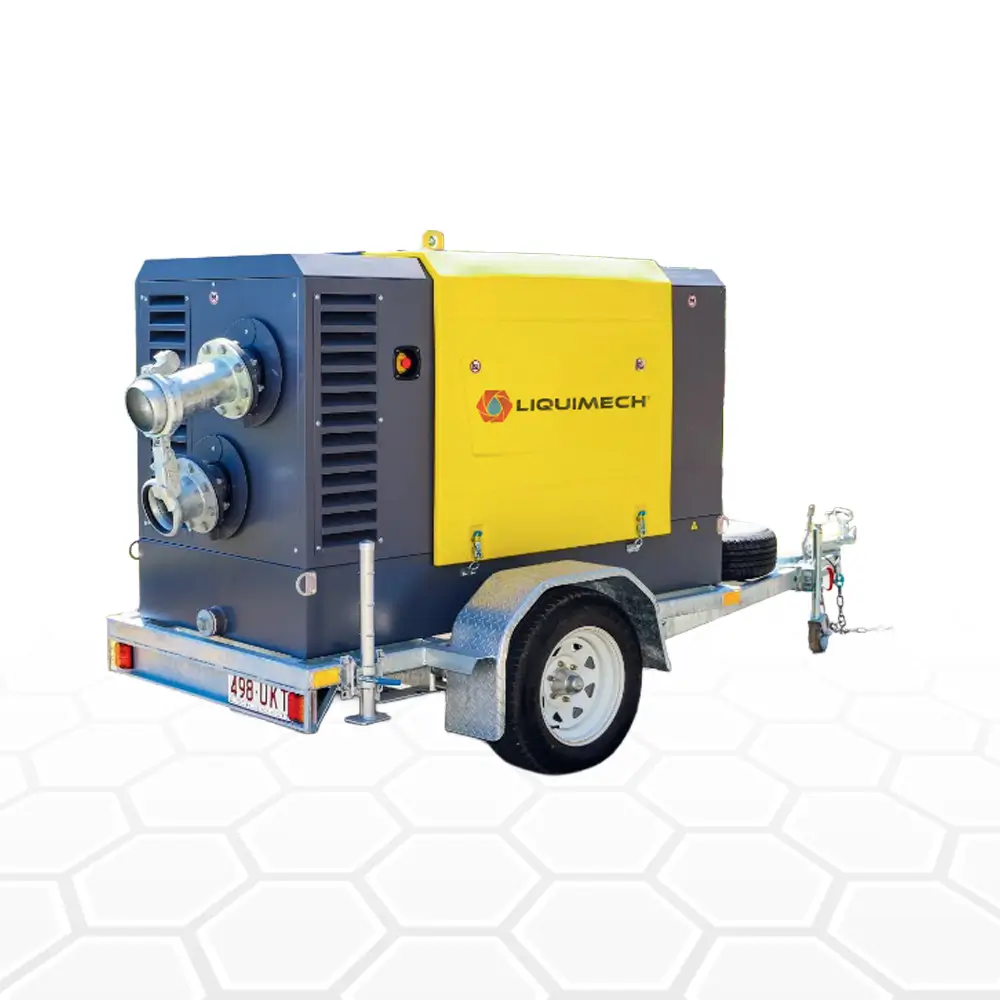
- Trailer-mounted pumping systems
The lightweight configuration also supports handling, deployment and retrieval where rapid setup is important.
*Application suitability depends on pump configuration and site conditions.
Water Authorities & Environmental Water Management
Water authorities and environmental projects may require controlled extraction from dams, ponds, reservoirs and other water bodies.
A floating intake can help position the suction point away from the bottom while maintaining a submerged intake as water levels change.
This can support water-transfer and environmental water-management applications where maintaining a suitable intake position is important.
Floating Suction vs Fixed Intake
The main difference between a floating and fixed intake is how the suction position responds to changing water levels.
| Floating Suction Device | Fixed Intake |
| Follows changing water levels | Remains at a fixed elevation |
| Keeps the intake below the water surface | Intake position remains unchanged |
| Helps reduce sediment pickup from the bottom | May draw closer to settled sediment depending on location |
| Helps minimise air ingestion and vortex formation | Performance can be affected by intake position |
| Suitable for changing water conditions | Best suited where a fixed intake elevation is appropriate |
The appropriate intake configuration depends on the water source, pump, flow requirements, operating depth and site conditions.
Key Benefits of a Floating Suction Device for Pumps and Water Intake Systems
A properly configured floating intake can provide several operational advantages.
Cleaner Water Intake
Keeping the intake above the bottom helps minimise the pickup of sand, silt, mud and other settled material.
Reduced Vortex Formation
Integrated anti-vortex technology helps minimise vortex formation and associated air entrainment.
Protection for Pumping Equipment
Reducing sediment and air ingestion can help protect pumps and associated equipment from conditions that may contribute to wear or unreliable operation.
Adaptation to Changing Water Levels
The floating configuration follows the water level, maintaining the intake below the surface as the source rises and falls.
Rapid Deployment
The lightweight modular design can enable fast installation with minimal civil works, depending on the system configuration and site requirements.
Engineered for Different Pumping Requirements
No two water-transfer applications are exactly the same.
Pump flow rate, suction requirements, water depth, water quality, connection type and site conditions all influence the appropriate Floating Suction Device configuration.
Liquimech provides modular and custom-built configurations designed around the application rather than relying on a single standard arrangement.
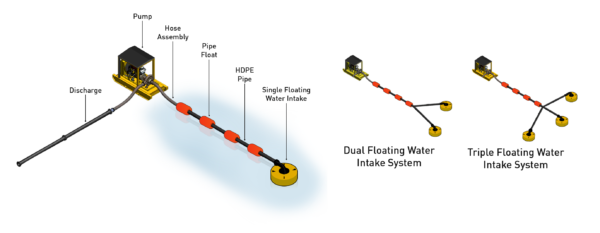
Depending on the project, the complete water-transfer system can include:
- Land-based pumps
- Amphibious pumps
- Submersible pumps
- HDPE pipe systems
- Pipe floats
- Pipe spools
- Reducers
- Valves
- Hoses
- Custom pumping packages
This approach allows the floating intake to operate as part of a complete water-transfer system rather than as an isolated component.
What Should You Consider When Selecting a Floating Suction Device?
Selecting the correct system starts with understanding the water source and pumping requirements.
Pump Requirements
The pump’s flow rate, suction connection and operating requirements should be considered when configuring the intake system.
Water Source
The size, depth and characteristics of the dam, pond, reservoir, mine pit or other water source will influence the appropriate configuration.
Water Level Variation
Where water levels fluctuate significantly, a floating configuration can help maintain the intake below the surface as the level changes.
Sediment Conditions
The amount and type of sediment present in the water source should be considered when determining the intake position and configuration.
Connection Requirements
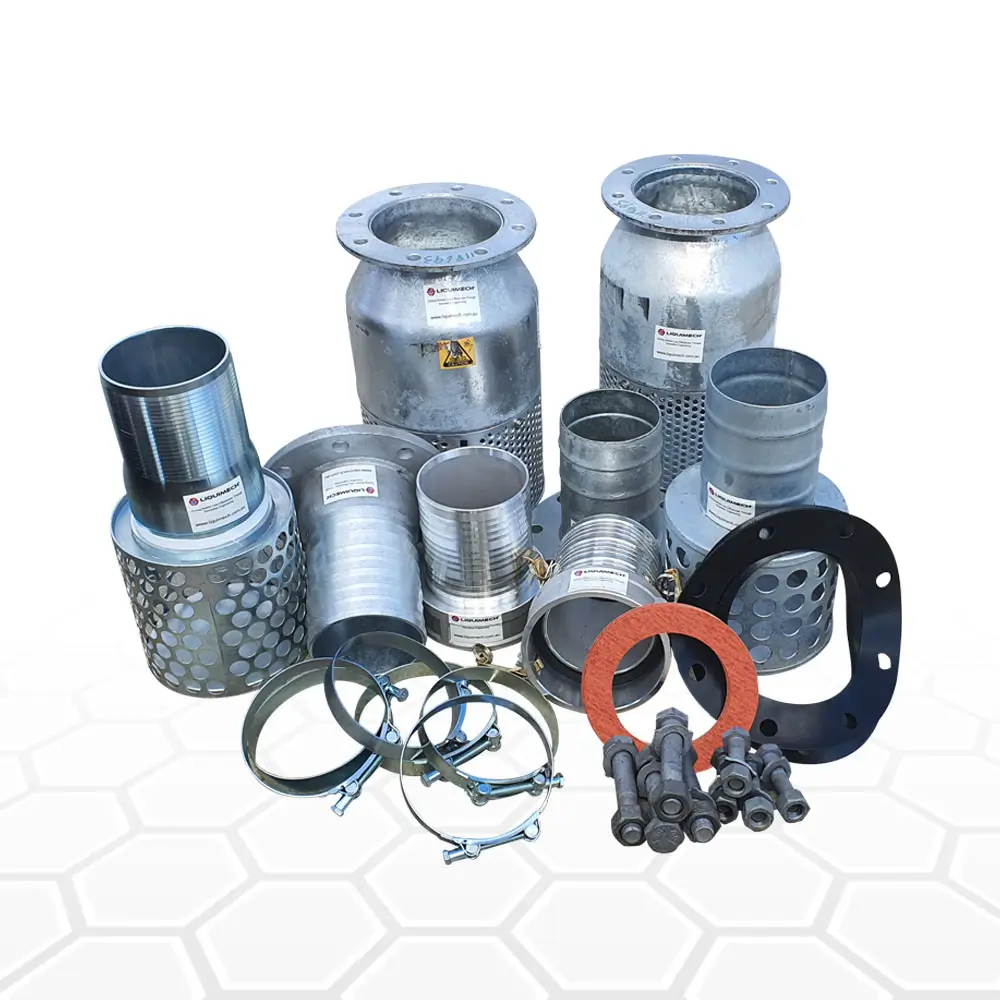
The floating intake should be configured to integrate with the selected HDPE pipe, steel pipe, flexible hose or other suction-line arrangement.
Site Conditions
Access, deployment requirements, operating environment and available pumping infrastructure should all be considered during system design.
For more complex applications, accurate pump and site information allows the system to be configured to suit the specific operating conditions.
Installation and Deployment
Installation requirements vary according to the system configuration, pump arrangement and water source.
A typical installation involves connecting the Floating Suction Device to the pump suction line and positioning the system in the water source.
Before operation, the system should be checked to confirm that:
- The intake is correctly connected to the suction line.
- The float provides stable flotation.
- The intake remains suitably submerged.
- The suction line is correctly supported.
- Connections and fittings are secure.
- The system operates freely through the expected water-level range.
Application suitability should always be assessed against the pump configuration and actual site conditions.
Integrating the Floating Suction Device for Pumps and Water Intake Systems into a Complete Water-Transfer System
A pump intake is only one part of a reliable water-transfer system.
The performance of the overall system depends on how the intake, pump, suction line, pipework, valves and other components work together.
Liquimech can supply complete engineered water-transfer solutions incorporating the floating intake with:
- Pump systems
- HDPE pipe
- Pipe floats
- Hoses
- Valves
- Flow meters
- Foot valves
- Telemetry
- Custom pumping packages
This integrated approach helps simplify system design and ensures the components are selected around the intended application.
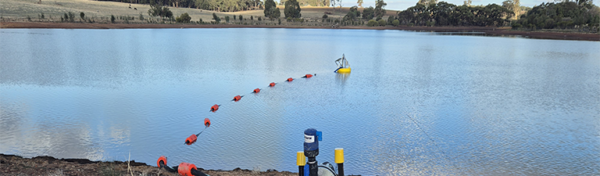
Why Choose Liquimech for Water Intake?
Liquimech designs and manufactures engineered water-management solutions for demanding Australian applications across mining, agriculture, civil construction, industrial operations and infrastructure.
Our Floating Suction Device for Pumps and Water Intake Systems are designed to address common water-intake challenges including changing water levels, sediment pickup, vortex formation and air entrainment.
Each system can be configured around the pump, water source and operating requirements, with modular and custom-built options available.
Designed and manufactured in Australia, Liquimech Floating Suctions are engineered for demanding operating environments and can form part of a complete water-transfer solution.
Frequently Asked Questions
How does a Floating Suction Device work?
A Floating Suction Device uses a buoyant round float to keep the pump intake submerged below the water surface. As the water level rises or falls, the floating intake follows the water level while remaining above the bottom of the water source.
This helps draw cleaner water while minimising sediment pickup and air ingestion.
What is the difference between a Floating Water Intake and a fixed intake?
A floating water intake follows changing water levels, while a fixed intake remains at a set elevation.
The floating configuration can help maintain a suitable submerged intake position and reduce the likelihood of drawing excessive sediment from the bottom or air from the surface.
Can a Floating Suction Device reduce sediment entering a pump?
Yes. Positioning the intake below the surface and away from the bottom can help minimise the pickup of settled sand, silt, mud and other sediment.
The actual level of sediment reduction depends on the water source, intake configuration and site conditions.
Can floating suction systems be used for mine dewatering?
Yes. Floating water intakes are suitable for mine dewatering applications where water is extracted from mine pits, dams, ponds or other water-management facilities.
They can help maintain the intake away from settled sediment while adapting to changing water levels.
Can a Floating Suction Device be used for irrigation?
Yes. Floating water intakes can be used for irrigation applications involving farm dams, ponds and reservoirs.
They help position the suction intake below the surface and can reduce the pickup of sediment compared with a poorly positioned bottom intake.
Can floating water intakes be used in shallow water?
Yes. Liquimech Floating Suction Device for Pumps and Water Intake Systems can operate in water depths as low as 180 mm*.
Actual suitability depends on the pump configuration, intake arrangement and site conditions.
*Application suitability depends on pump configuration and site conditions.
Can a Floating Suction Device be used for firefighting?
Yes. Floating Suctions can be used for firefighting and emergency water supply applications, including shallow water sources.
They can be integrated with trailer-mounted pumps and portable pumping systems where the configuration is suitable for the application.
Does the system work as water levels change?
Yes. The buoyant float allows the intake to follow changing water levels while keeping the suction point below the surface.
This makes the system particularly useful for dams, ponds, reservoirs and other water sources where water levels fluctuate.
How do I choose the right Floating Suction Device?
The correct configuration depends on factors including the pump, required flow rate, suction connection, water-source dimensions, operating depth, sediment conditions and site requirements.
Liquimech can configure a modular or custom-built system around these requirements.
Can Liquimech provide the complete water-transfer system?
Yes. Liquimech can supply complete engineered water-transfer solutions, including pumps, HDPE pipe systems, pipe floats, hoses, valves, reducers, pipe spools and custom pumping packages.
This allows the floating intake to be designed as part of the complete water-transfer system.
Talk to the Water Transfer Experts
If you need a Floating Suction Device for mine dewatering, irrigation, firefighting, industrial water transfer or another water-management application, Liquimech can help configure a solution around your pump, water source and operating conditions.
Speak with the Liquimech engineering team to discuss your application, system requirements and water-transfer configuration.
Cleaner water intake. Better pump protection. Reliable water transfer.